Have you ever noticed blinking LED lights overhead in a big‑box store? Read on to learn how this issue can be resolved.
Walking into a retail store often reveals more than the merchandise on display. The lighting overhead can tell its own story—sometimes a distracting one. In many retail environments, blinking or failing LED fixtures immediately draw attention away from the shopping experience. During a recent visit to a major big‑box store, this issue was on full display, with several LEDs flickering and others already out.
What’s With The Blinking?
In the below pictures you see an example of a big box store with PAR LED lamps that were blinking. This type of flickering typically occurs when the driver malfunctions and fails to supply the correct current to the diodes. Several lamps were also completely out, indicating full driver or diode failure. Many big‑box retailers operate their lighting at 277V, and lower‑cost PAR lamps with internal drivers often struggle at that voltage. High Lighting Service Company recommends using LED fixtures built with diodes mounted on robust aluminum heat sinks and paired with drivers that are separated from the heat source for improved reliability.
Blinking PAR 38 lamps create a significant visual distraction and negatively impact the customer experience.
The store had also retrofitted its linear 4′ single‑tube fluorescent fixtures with all‑plastic LED tubes. A noticeable number of these tubes had failed, and some were visibly sagging. High Lighting Service Company uses only ballast‑bypass aluminum heat‑sink LED tubes to ensure better heat resistance and greater structural rigidity.
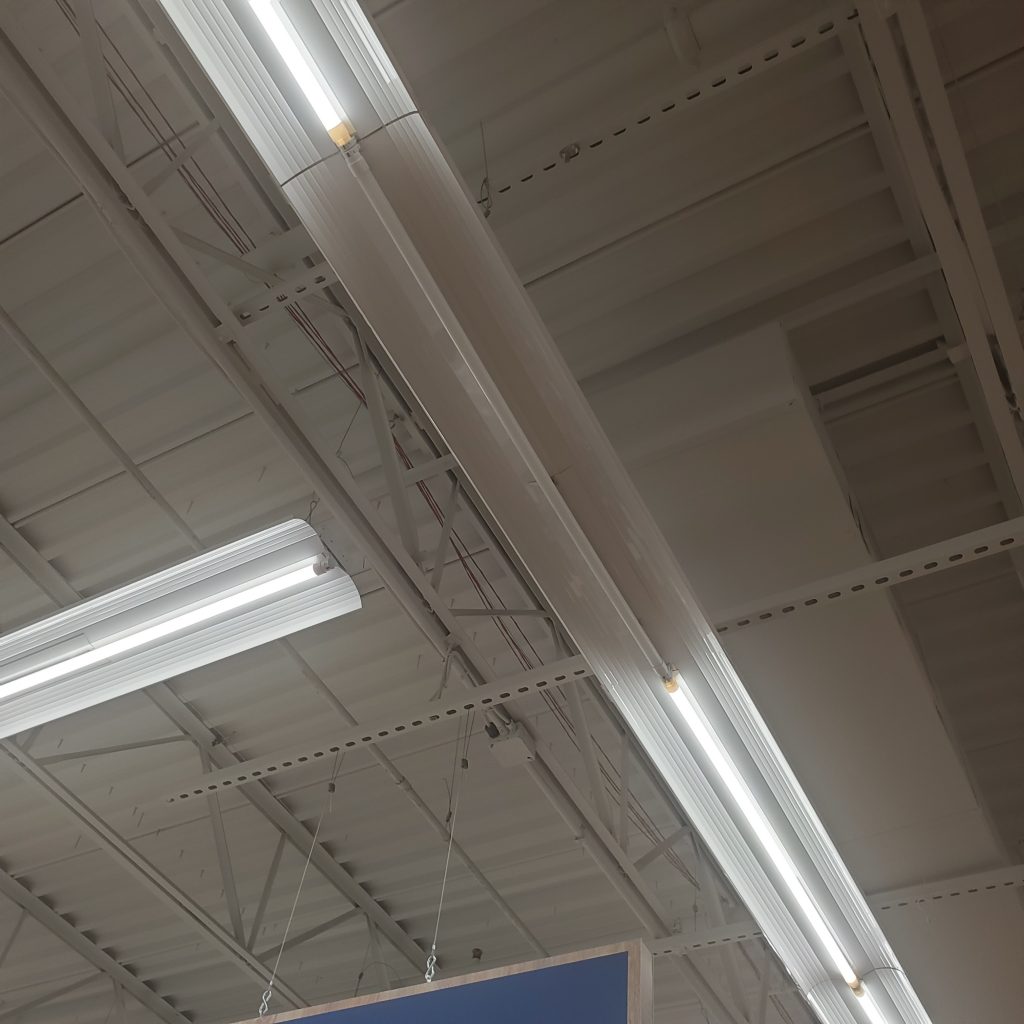
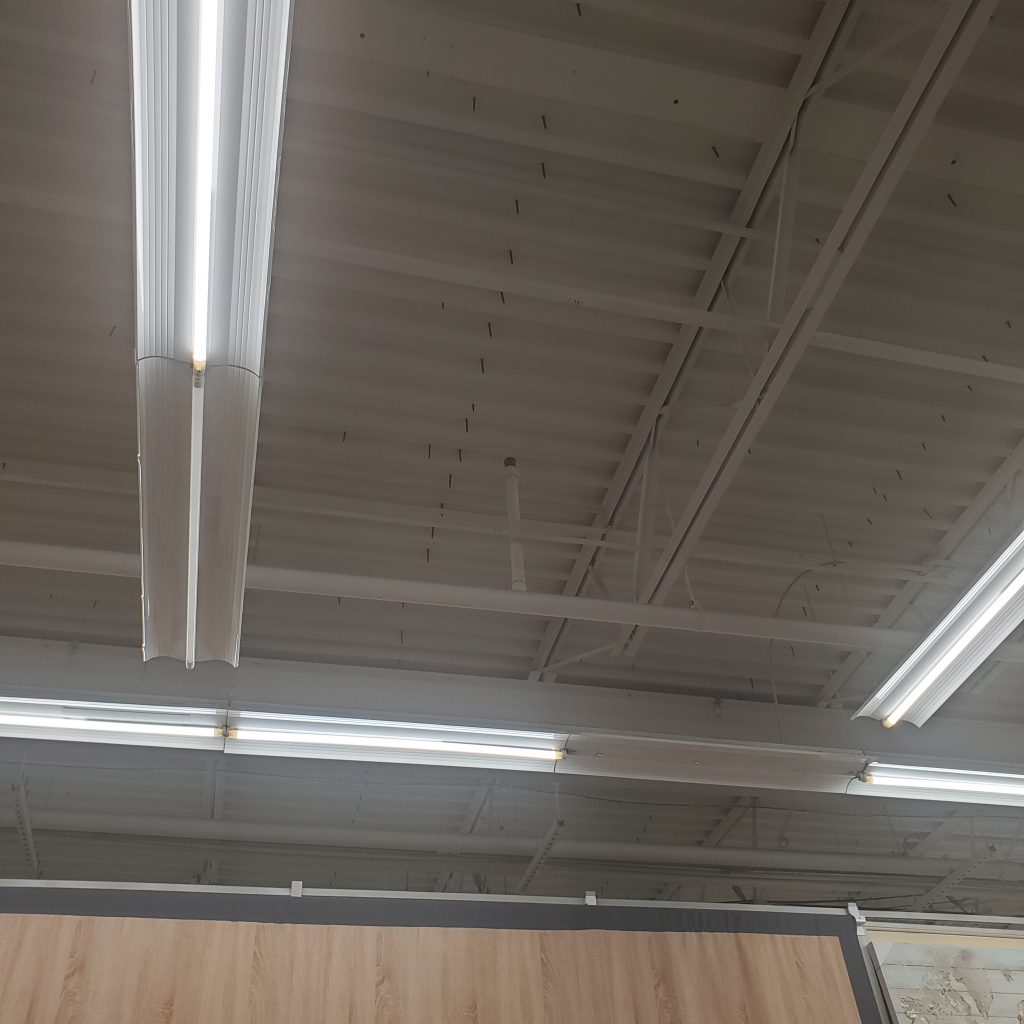
Failed LED Tubes inside the big box store.
Why were these LEDs installed in the first place?
Part of the challenge this big‑box store is facing stems from early generations of LED retrofit products. Many of those initial models were built with lower‑quality components and have not lasted anywhere near their advertised lifespans. As a result, numerous early LED manufacturers that flooded the market with low‑end tubes are no longer in business, leaving early adopters with products that failed prematurely and little to no warranty support. Unfortunately, the problems did not stop there.
Shouldn’t the lighting make the merchandise stand out?
Another issue was that the lighting did not adequately illuminate the merchandise. Early generations of LED retrofit products often had low CRI ratings and limited lumens‑per‑watt performance. As with any technology, improvements have come with time. Modern LEDs now feature stronger component packages and significantly higher lumens‑per‑watt ratings, resulting in better overall lighting quality.
 This is NOT the big-box store that I visited, but rather a new LED fixture
project that we installed at the Manoogian Museum in Southfield, MI.
What High Lighting Service would have done
For a situation like this, High Lighting would develop a maintenance program within a defined budget to upgrade the lighting. The process would begin with a light‑meter reading and spot‑testing of high‑quality LED fixtures to ensure improved product displays (see how the Manoogian Museum was upgraded). These improvements often increase sales enough to pay for themselves.
Contact High Lighting to assess your current lighting and learn how upgraded solutions can help boost your sales!